
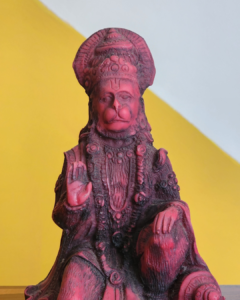
 As we continue our journey through the sacred verses of the Hanuman Chalisa, verses 25 and 26 remind us of Hanuman’s boundless generosity and his role as a compassionate giver of blessings. These lines highlight the deep relationship between devotion and grace, showing us that when the heart turns sincerely toward Hanuman, divine support is never far away.
Verse 25
“Aur manorath jo koi lavai, soi amit jeevan phal pavai.”
Whoever comes to you with heartfelt wishes receives abundant fruits in life.
This verse speaks to Hanuman’s compassionate nature. Devotees who approach him with sincerity, humility, and faith are said to receive the blessings they seek. But the meaning of this verse reaches deeper than simply fulfilling wishes.
In the spiritual sense, “manorath” refers not only to worldly desires but also to the deeper longings of the heart—the desire for peace, purpose, devotion, and connection to the Divine. When we turn toward Hanuman with faith, we open ourselves to a flow of grace that often brings us exactly what we need, even if it looks different from what we originally imagined.
The phrase “amit jeevan phal” suggests limitless rewards or fruits of life. These blessings may come in many forms: courage during difficult times, clarity in moments of confusion, or the quiet strength to continue walking our spiritual path.
Hanuman reminds us that devotion is not transactional. Instead, it is a relationship built on trust. When we offer our prayers with sincerity, the fruits of that devotion unfold naturally.
Verse 26
“Charon jug partap tumhara, hai prasiddha jagat ujiyara.”
Your glory shines throughout the four ages, illuminating the world.
In this verse, Tulsidas celebrates the timeless presence of Hanuman. The phrase “charon jug” refers to the four ages of time in Hindu cosmology—Satya Yuga, Treta Yuga, Dvapara Yuga, and Kali Yuga. By saying that Hanuman’s glory shines across all these ages, the Chalisa reminds us that his power and presence are eternal.
Hanuman is not confined to a particular moment in history. His strength, devotion, and protection continue to illuminate the world even today.
For devotees, this verse offers a profound reassurance: Hanuman’s light is always available to us. His presence transcends time, culture, and circumstance. Wherever devotion exists, Hanuman’s energy is alive.
The final phrase, “jagat ujiyara,” means “illumining the world.” Hanuman is seen not only as a protector but as a beacon of spiritual light—guiding hearts toward courage, humility, and service.
Living These Verses
Together, these two verses reveal something powerful about the nature of devotion. When we approach Hanuman with sincerity, we are met with grace. And when we remember his presence, we are reminded that divine light is always shining—even in difficult moments.
Hanuman’s life teaches us that the greatest power comes not from personal strength alone, but from unwavering devotion and selfless service.
Maharaj-ji Neem Karoli Baba often reminded devotees that Hanuman represents the highest form of bhakti—pure love for God expressed through service to others. When we feed the hungry, care for those in need, or act with compassion, we walk in the footsteps of that same devotion.
These verses invite us to reflect:
- What desires live in the deepest part of my heart?
- Am I offering them with trust and humility?
- How can I bring more light into the world through acts of love and service?
Through Hanuman’s example, we are reminded that grace flows where devotion lives.
May his strength guide us, his compassion protect us, and his light continue to illuminate our path.
Jai Hanuman! Jai Maharaj-ji!